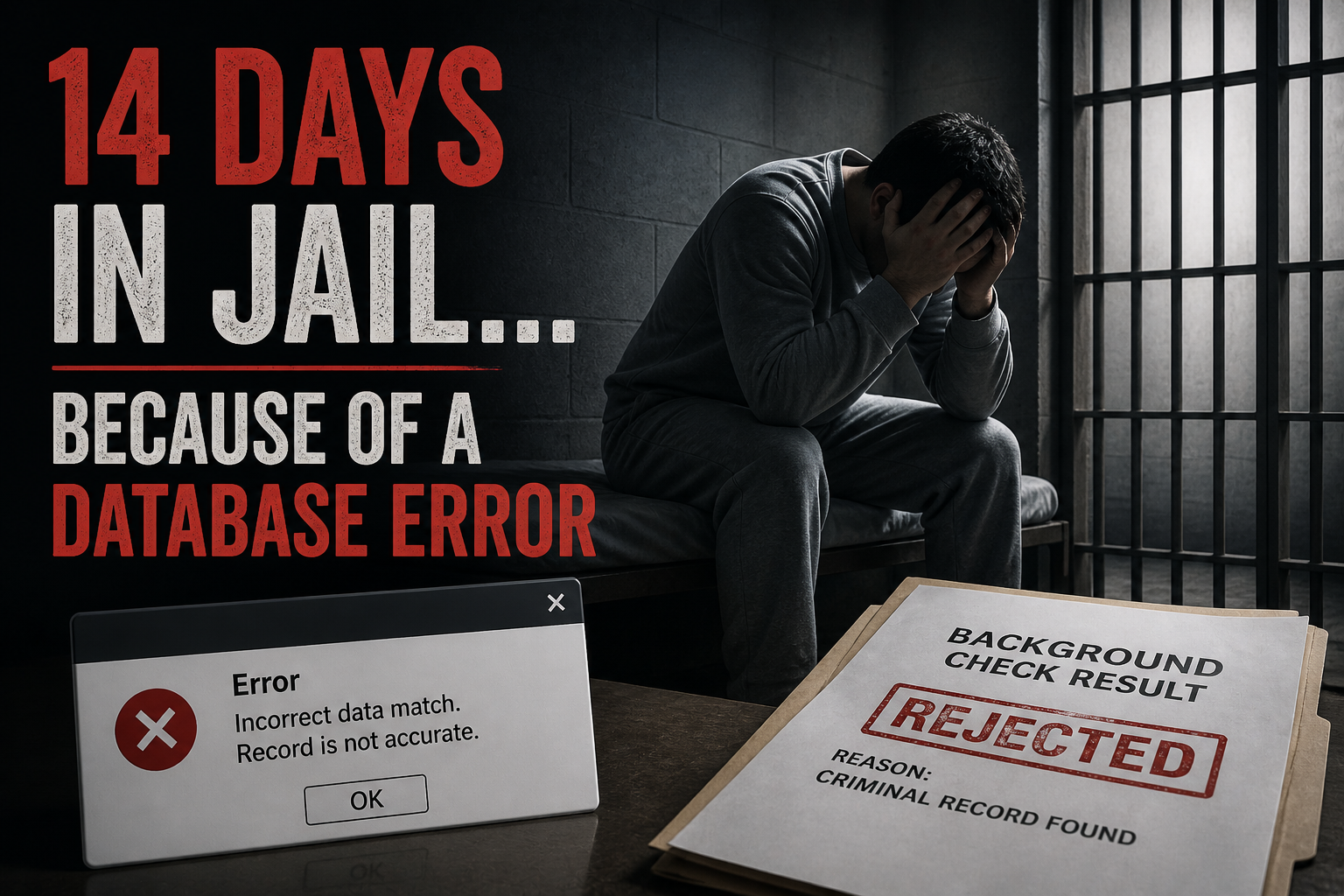
A man spent 14 days in jail… because of a database error.
Not because of a confirmed crime.
Not because of a verified court record.
But because of a database error.
Michael Brewer spent 14 days in jail.
Law enforcement relied on information from the National Crime Information Center (NCIC) that showed a prior felony. The problem?
---The felony had already been reduced to a misdemeanor.
---The database was never updated.
---No one verified the court record.
And just like that—
A “hit” became an arrest.
An arrest became 14 days in jail.
This is the industry reality:
Anyone can return a clear.
Databases are full of them.
But when a “hit” appears—
That’s where the real work begins.
Because a hit is not the answer.
A hit is a question.
--Is it accurate?
--Is it current?
--Is it the right person?
--What is the actual disposition?
In this case, none of those questions were properly answered.
This isn’t just a law enforcement issue.
It’s a background screening issue.
Because too many systems still treat database results as fact—
instead of what they really are:
---Unverified indicators
The difference >
Anyone can get the clears.
It’s the hits we pay for.
And more importantly—
It’s what you do after the hit that defines the quality of your search.