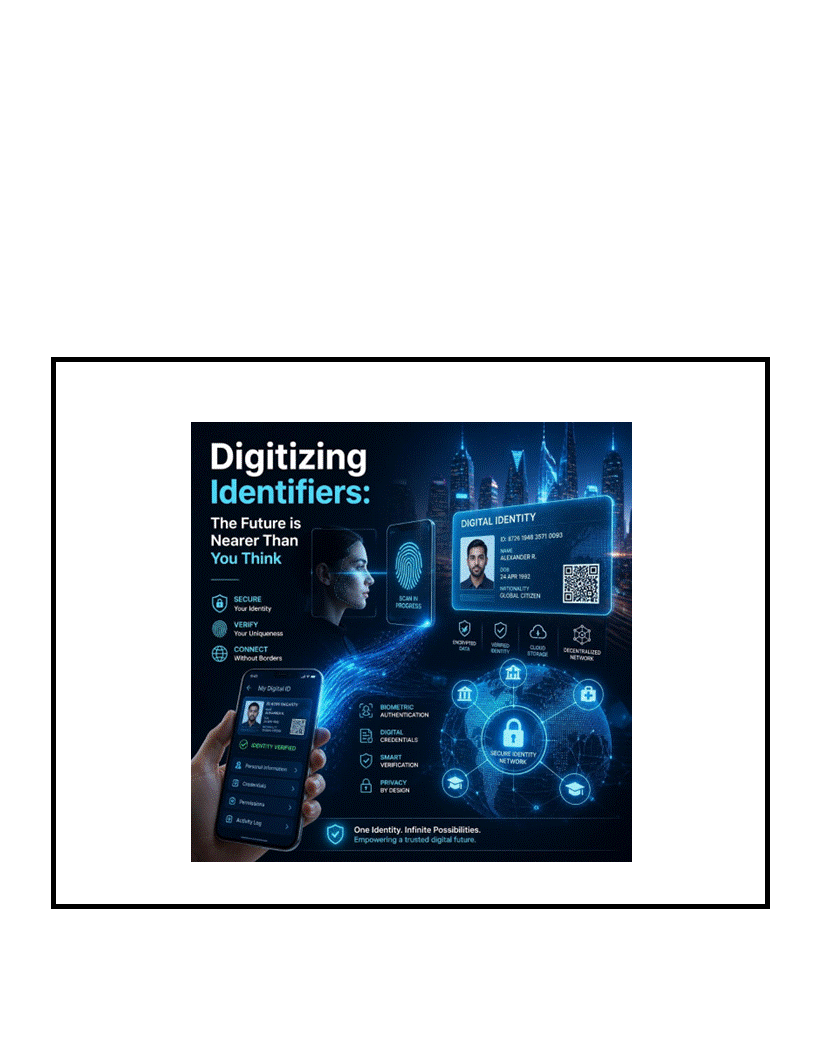
The traditional background screening model is running on borrowed time.
For decades, the foundational bedrock of a legally compliant background check has been simple: look up a name, find a record, and verify it using a physical identifier—usually a Date of Birth (DOB) or a Social Security Number (SSN). This "Name + DOB" standard was the industry's gold standard for satisfying the Fair Credit Reporting Act’s (FCRA) mandate for maximum possible accuracy.
But that standard is evaporating.
From California to Michigan, and across global jurisdictions under GDPR, court administrators are aggressively redacting DOBs and identifiers from public access terminals. In-person court researchers are facing massive roadblocks, clerks are bottlenecked, and the simple act of matching a record to a human being has become a high-risk compliance gamble.
If we can no longer rely on open, raw public identifiers at the clerk’s window, how does the screening industry survive?
The answer requires a complete paradigm shift: we must stop treating personal identity as a raw string of text passed back and forth, and start digitizing identifiers at the infrastructure level. The future of screening isn't just about finding records; it's about engineering how identity data is secured, vaulted, and validated. And that future is already arriving.
1. The Crisis: The Death of the Public Match
When a court strips DOBs from its public index, it doesn't delete the data from the master file—it just hides it from the public eye. This leaves the industry with a dangerous problem:
⚠️ The Common Name Trap
If a court index only shows a conviction for "John Smith," a background screening firm cannot legally report that record based on the name alone. Without an identifier, the record is useless. Forcing researchers to guess or pass unverified "digital pointer files" down the line is an invitation for multi-million dollar class-action lawsuits.
Relying on a clerk-assisted search for every single file slows turnaround times to a crawl, driving up costs and frustrating clients who want instant onboarding. The industry is being squeezed on both ends: clients demand speed, while privacy regulations starve us of the data needed for accuracy.
2. What Does "Digitizing Identifiers" Actually Mean?
Digitizing identifiers is the process of taking an applicant’s real-world credentials (like an SSN, a passport, a verified address history, or biometric data) and locking them into an encrypted, digital vault the second they enter the system.
Instead of typing a candidate's raw name and birthdate into an email, sending it to a field researcher, and then pasting it onto a final report, the identifiers are converted into an unalterable Digital Identity Vault.
Think of it like a secure, digital passport. The raw data is verified once at the point of intake using advanced identity verification tools. Once verified, that identity is assigned an immutable, digital cryptographic key.
3. The Two-Sided Architecture: Source vs. Transmission
Digitizing identifiers splits the background screening pipeline into two distinct, highly secure zones:
Zone 1: The Source Level (Boots-on-the-Ground)
A digital token cannot walk into a county courthouse or log into a secure state repository. At the source level, unadulterated court information is still king. Trusted researchers and direct integrations still query the court files using real, verified identifiers to ensure an absolute match.
Zone 2: The Transmission Level (The Data Shield)
The moment the record is verified at the source, it moves into the digital vault. The raw PII is stripped away, and the verified record is married directly to the digital identifier key.
When the background check moves from the CRA to the employer’s software system, it travels as a protected, digital profile. The employer's system doesn't need to hold or view vulnerable, raw PII throughout the initial hiring process—the digital key proves the accuracy of the match behind the scenes.
Looking Ahead: The Next Phase
Digitizing identifiers solves the first half of the industry's crisis: it protects the data at intake and guarantees an ironclad match at the source. But it raises an immediate operational question:
Once the identifiers are digitized and the court record is matched, how do we actually deliver that report to an employer without exposing our business to massive data protection liabilities?
In our next article, we will look at the exact operational framework designed to handle this: The Tokenized Report. We will break down how to use a simple "coat check" system to pass risk profiles to clients seamlessly, allowing CRAs to maintain maximum accuracy, strip out hiring bias, and stay entirely ahead of global privacy laws.