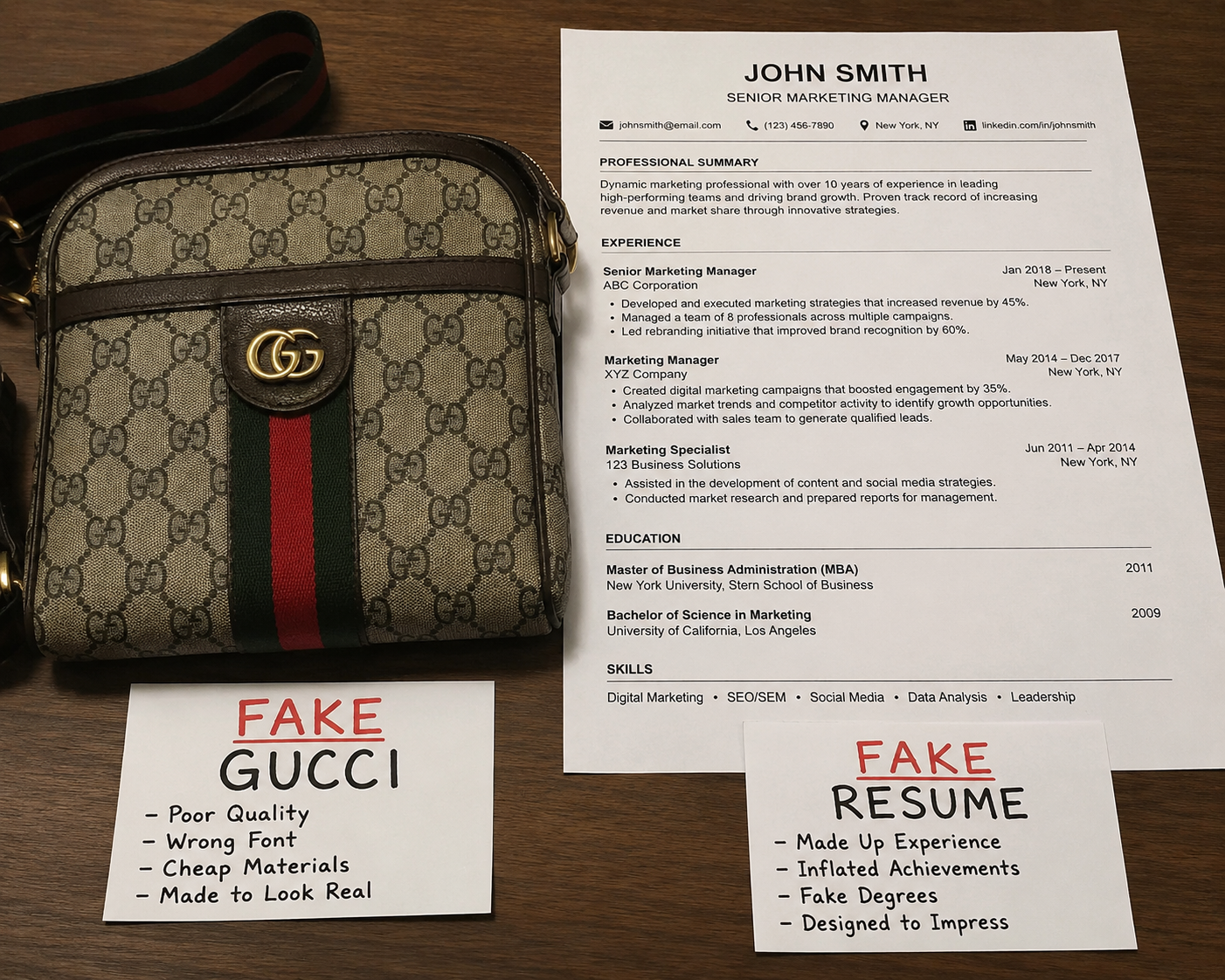
The Fallacy of the Integrity Test: CV Fraud Case Exposes Systemic Screening Gaps
A recent case detailing a doctor’s suspension for fabricating their employment history and hiding structural background facts serves as a critical compliance warning for the corporate verification and background screening industry.
The case underscores a persistent operational risk: the dangerous reliance on an applicant’s self-disclosure as a psychological "integrity test" rather than executing strict, hands-on, primary-source verification.
The Anatomy of the Fraud
The medical professional systematically manipulated application processes by falsifying employment history and concealing material background records across multiple training and specialty applications.
By strategically checking "no" on mandatory background disclosure forms, the candidate successfully bypassed basic automated vetting barriers. Subsequent independent primary-source verification ultimately exposed that the individual had a historical criminal record directly tied to document fraud and misrepresentation.
Despite these severe historical indicators, the individual managed to exploit procedural gaps to secure highly competitive appointments before a manual audit brought the deep-seated deception to light.
Why the "Self-Disclosure" Model Fails
Many Human Resource departments and automated screening platforms treat applicant self-disclosure sections as a reliable filter. The underlying assumption is that the threat of a background check will deter bad actors, or that checking a box acts as an active validation tool. This case decisively dismantles that premise.
High-risk candidates or sophisticated bad actors will boldly lie on digital declarations if they believe an employer’s system relies on a passive, "check-the-box" workflow. When organizations accept an uploaded document or a self-reported history at face value without validating it directly at the point of origin, they create a severe security blind spot.
The Operational Takeaway for Screeners
For background investigators, record retrievers, and risk mitigation professionals, this credential fraud case reinforces three core screening pillars:
- Self-Disclosure Is Not Evidence: An applicant's signed statement or uploaded timeline is merely a starting point. It must never replace direct, independent, primary-source verification conducted directly with the originating courts, regulatory boards, and past institutions.
- The Danger of Digital Pre-Filtering: Automated applicant tracking systems (ATS) that rely heavily on AI filtering and self-reported data often give employers a false sense of security. If the underlying data is a fabrication, the filter is useless.
- The Power of the Manual Standard: High-consequence fields—such as healthcare, financial services, and executive placements—require a rigorous, human-in-the-loop workflow. Automated database pings frequently miss nuanced history, enabling fraudulent actors to manipulate multiple steps of the onboarding process.
Industry Benchmark: True compliance means moving beyond passive data collection. If a screening process doesn't actively cross-reference an applicant's claims directly with primary public records, it isn't an investigation—it's simply an administrative rubber stamp.