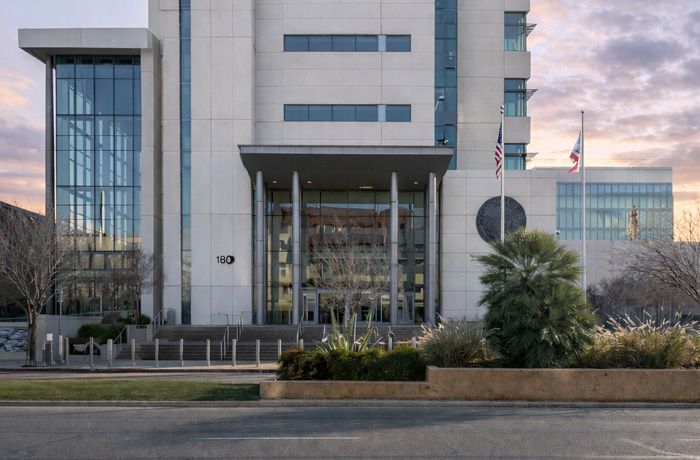
For years, the background screening industry has championed a simple truth: if you want unadulterated, maximum possible accuracy under the Fair Credit Reporting Act, you send a human being to the courthouse. While database factories scrape dirty digital pointer files and pray for the best, professional retrievers do the hard work of verifying ground truth at the public access terminals (PATs) and clerk counters.
But right now, a frustrating trend is sweeping across county courts—and California’s San Joaquin County is the latest flashpoint. In an aggressive bid to protect their infrastructure from automated "bots" and bulk commercial data harvesters, court administrators are enacting defensive policies that are inadvertently grinding the manual, human-driven retrieval process to a screeching halt.
The Electronic Iron Curtain
Earlier this month, San Joaquin County instituted a dual-track throttling system that reads like an anti-automation playbook. On their remote online portal, the court clamped a hard cap on indexing queries, limiting searches to just 2 to 5 names per IP address daily. The target was obvious: shut down the automated scripts running thousands of rapid-fire queries to build nationwide databases.
The unintended consequence? It forced the volume off the internet and straight through the front doors of the Stockton courthouse.
But retrievers arriving on the ground didn't find relief; they found a second wall. To prevent what administrators see as "terminal hogging" by high-volume screening runners, San Joaquin enacted a strict 2-hour daily time limit per person on their physical courthouse PATs. If you have a stack of applicant files to clear, your clock is ticking the second you log in. If you hit a potential match, the friction deepens—case files must be ordered from offsite storage by appointment only.
A Perfect Storm of Slashing Hours
Making matters worse, this bottleneck is colliding with widespread municipal belt-tightening. Pursuant to Government Code section 68106, San Joaquin just executed a dramatic cutback to public counter availability while they transition to a new case management system.
According to the court's official administrative updates, clerk counters and phone lines across all branches (Stockton, Lodi, Manteca, and the Juvenile Justice Center) are systematically slashing their availability as follows:
- June 15 – August 14, 2026: Open 8:00 a.m. to 2:00 p.m.
- August 17 – September 4, 2026: Open 9:00 a.m. to 1:00 p.m.
- September 7 – October 30, 2026: Open 8:00 a.m. to 2:00 p.m.
When you cap online searches to single digits, boot researchers off courthouse computers after 120 minutes, and send the clerks home as early as 1:00 p.m., the math is simple: turnaround times in San Joaquin have instantly skyrocketed to an average of 15 business days.
[San Joaquin County Clerk Counter Operating Hours - 2026 Rollout]
June 15 – August 14: 8:00 AM – 2:00 PM
August 17 – Sept 4: 9:00 AM – 1:00 PM
Sept 7 – October 30: 8:00 AM – 2:00 PM
The Blunt Reality: Honesty Meets Greed
When you step back and look at why these court administrators are reacting so defensively, it’s hard to completely blame them. The truth of the matter is simple: yes, the professional background screening industry is built on maintaining an honest, accurate record—but it has also gotten incredibly greedy.
For the last decade, multi-million-dollar bulk data factories and screening conglomerates have treated local county courthouses like a free, infinite data buffet. Instead of investing in proper direct infrastructure or paying for commercial data access feeds, these massive operations deployed aggressive automated scraping scripts to relentlessly suck up records, routinely crashing local court servers in the process.
When they did send people to the courthouse, they sent low-paid runners with massive stacks of hundreds of files, completely "hogging" the public terminals for eight hours straight. They effectively weaponized public-use infrastructure to maximize corporate profit margins, leaving the local taxpayer, the neighborhood attorney, and the independent researcher completely locked out in the cold.
So, when a court like San Joaquin finally slams down a 2-hour terminal limit or blocks IP addresses, it isn't an unprovoked attack on public access. It is a desperate, defensive wall built to protect a strained public utility from being entirely consumed by corporate greed.
The Uncommon Name Trap
This gridlock highlights the fundamental flaw in modern court administrative policy. When courts restrict access, remove identifiers, or throttle terminal time to play defense against tech giants, they forget how actual compliance works.
As every veteran retriever knows, you cannot even prove a clear on a unique, uncommon name without proper access. If a rare name flags a single historical record, a responsible professional can’t guess. They have to verify the identifiers—such as the date of birth or physical address—to rule it out. But under a 2-hour ticking clock and a truncated building schedule, doing the basic due diligence required to protect an applicant from a mixed file becomes a logistical nightmare.
The Road Ahead
San Joaquin isn't an isolated incident. From the complete removal of statewide identifiers in South Carolina to strict 50-case-per-day limits in Connecticut, local courts are treating the data screening industry like an adversary rather than a critical partner in public safety and fair hiring.
By forcing a high-speed, modern compliance industry to stand in a slow, understaffed, manual paper line, courts aren't just stopping the bots. They are slowing down the economy, delaying qualified candidates from starting work, and making accurate background checks harder to achieve.
It’s time for court administrators to recognize that credentialed, professional retrievers aren't the ones destroying the system—it's the automated vultures driving the greed. Until the courts distinguish between the two, everyone loses.
By Steven Brownstein, Publisher